

Diploma in Chinese Herbal Medicine
Practitioner training with UK and Taiwan experts. This diploma combines online and on-site teaching, with live-streaming options available for international students. You will study classical and modern formulas, complete clinical placements, and gain 30 days of clinical training. An optional postgraduate hospital placement in Taiwan is also available.
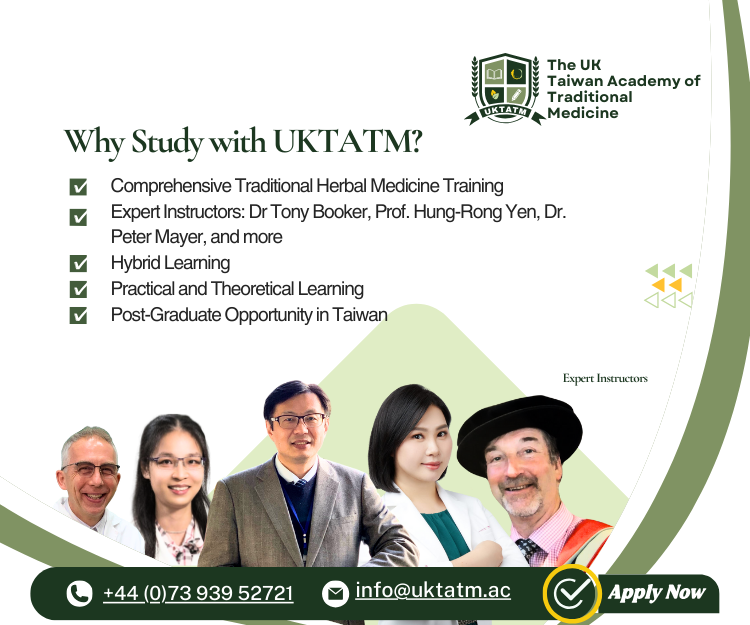
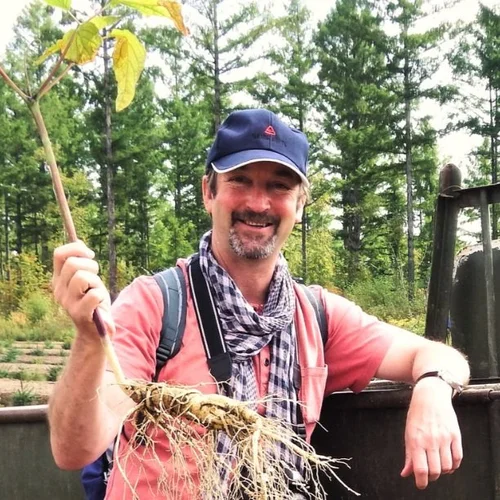 Instructors: Dr Tony Booker, Dr Hung-Rong Yen, and guest faculty from China Medical University Hospital
Credits across five specialist modules
Contact hours including teaching and clinical training
Clinical days with supervised practice
March 2027 to December 2028
Locations & Learning Format
Online and on-site learning, with live-streaming options available for international students. The course is delivered mainly on weekends to support flexible study.
Entry Requirements
Open to acupuncturists, degree-level graduates with a background in Western medical sciences, or graduates of the UKTATM Foundation Course.
Graduation Requirements
Complete the course with satisfactory attendance and assessment results. Students entering through the UKTATM Foundation Course without a Western medical science background must complete Level 3 Anatomy, Physiology and Pathology during the diploma or before graduation.
Clinical Development
Students gain structured clinical training and practical experience to support safe, confident herbal medicine practice.
Apply now to secure your place on the Diploma in Chinese Herbal Medicine.
Course Overview
This diploma course brings together some of the leading clinicians and researchers of Chinese herbal medicine and has a main goal of producing practitioners who are expertly trained in the clinical practice of Chinese herbal medicine and are able to confidently use a wide selection of safe and established formulations to treat patients effectively.
Course Duration
The course will run over an 22-month period, approximately two weekends per month, and includes a series of online lectures from Taiwan blended with on-site lectures and 30 days of clinical experience in our UK teaching clinic set in the heart of London.
For people who want to spread their training over a longer period it is possible to take individual modules of the curriculum, starting with Materia Medica and Ethnopharmacy.
Clinical Work Opportunity in Taiwan
There will be opportunities for further postgraduate clinical work at China Medical University Hospital in Taiwan, working alongside some of the most experienced and influential practitioners of Chinese medicine in a busy hospital setting.
Although the hospital has developed a strong research base and employs modern methods of diagnosis, the approach to treatment is chiefly centred around classical methods and with an emphasis on the shang han lun and wen bing theories on the treatment of disease.
This combination of an evidence-based approach coupled with the wisdom of classical teachings has established CMU as one of the world's leading hospitals specialising in integrative medicine.
Hybrid Learning - Online, Onsite Lectures / Clinical Work in London
A proportion of lectures will take place online and be streamed from locations within the UK and from Taiwan and there will also be onsite lectures in London. Clinical work will take place in the UK teaching clinic, with input from China Medical University Hospital. The lectures and clinical work will be under the direction of Dr Hung-Rong Yen in Taiwan and by Dr Tony Booker in the UK.
Instructed by Industry Experts
Dr Hung-Rong Yen is the current Dean of China Medical University and well known as a leading clinician and researcher in the field of Chinese medicine. Dr Tony Booker is a reader (associate professor) in ethnopharmacology, focusing on East Asian medicine, he has been a practitioner of acupuncture and Chinese herbal medicine for over 25 years and is a past President of The Register of Chinese Herbal Medicine (RCHM).
Entry Requirements:
Acupuncturists with a degree-level qualification in Chinese medicine acupuncture, and Western medical sciences (Read the detailed Entry Requirement here)
(Individuals who do not meet the prerequisites are encouraged to complete a foundation course beforehand.)


This course has been designed in consultation with the European Herbal and Traditional Practitioners Association (EHTPA) and follows the EHTPA curriculum.
We have informed the Chair of the EHTPA Accreditation Board that we intend to apply for Accreditation at the end of our first year.
Graduates from this course will be able to apply for membership of the RCHM and update their professional insurance to include Chinese herbal medicine.
Train to be a qualified TCM Herbalist
Train to be a qualified TCM Herbalist
Apply Now to begin your exciting journey towards becoming a skilled TCM herbalist!
Download Full Course Syllabus here
Chinese Herbal Medicine Diploma 2027–28 timetable. The course combines on-site, online, and live-streamed teaching across five diploma modules.
Module 1 – Materia Medica (CHM001)
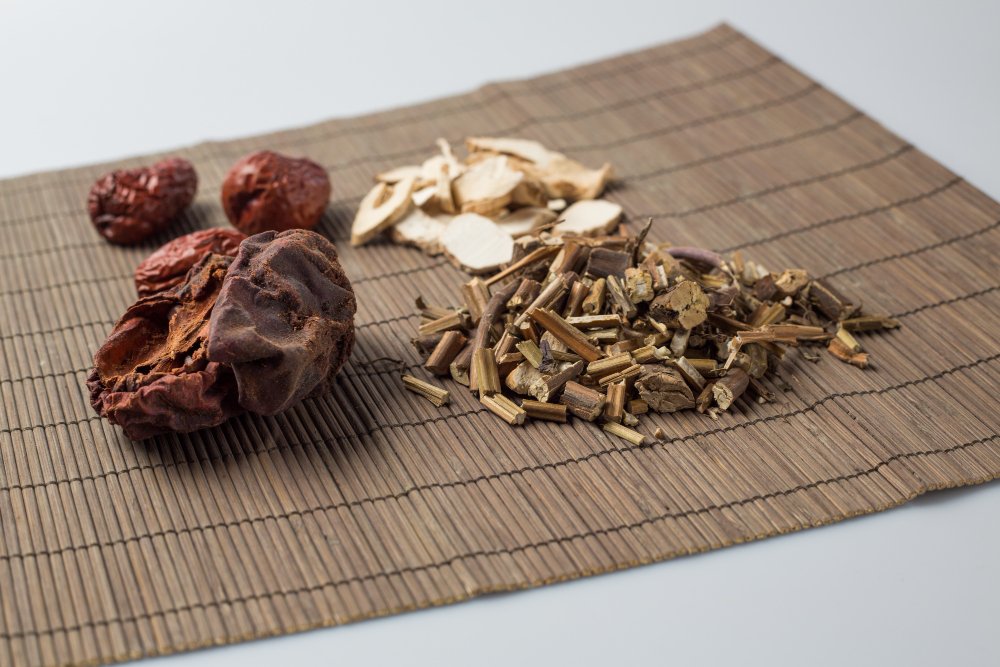
Learn the herbs and formulas of Chinese Medicine including tonification, harmonisation, exterior-releasing, phlegm/damp, food therapy, and herb research.
Weeks 1–2 (6–7 & 20–21 Mar 2027)
- 6 Mar: Introduction to the herbs and formulas module; online tools, submitting coursework and module handbook; Formulas that Tonify Yin (on-site)
- 7 Mar: Herb Research 1; Formulas that Regulate Blood (on-site)
- 20 Mar: Formulas that Tonify Qi & Blood; Formulas that Harmonise & Regulate Qi (on-site)
- 21 Mar: Formulas that Clear Heat / Fire; Phytochemistry 1 (on-site)
Weeks 3–4 (10–11 & 24–25 Apr 2027)
- 10 Apr: Formulas that Tonify Yang; Formulas that Warm the Interior; Phytochemistry 2 (online)
- 11 Apr: Formulas that Harmonise & Regulate Qi; Formulas that Release the Exterior (online)
- 24 Apr: Formulas that Expel Wind; Formulas that Treat Food Stagnation; Phytochemistry 3 (online)
- 25 Apr: Formulas that Stabilize and Bind; Formulas that Moisten the Intestines & Unblock the Bowels; Formulas that Dispel Phlegm; Formulas that Expel Dampness (online)
Week 7 & Poster Presentations (12 Jun & 10 Jul 2027)
- 12 Jun: Nutrition 2 (Chinese Food Therapy); Herb Research 2 (online)
- 10 Jul: Poster presentations CHM001 (online)
Assessment (Jul 2027)
- Case History Assignment – 50%
- Focus-on-a-herb Poster – 50%
Module 2 – Shang Han Lun and Wen Bing (CHM002)
Study the classical texts and formula patterns of febrile diseases, including Shang Han Lun and Wen Bing, supported by tutorial discussion.
Weeks 7–9 (13 Jun–10 Jul 2027)
- 13 Jun: Introduction to the Classics; Tutorial (online)
- 26 Jun: Shang Han Lun 1; Tutorial (online)
- 27 Jun: Shang Han Lun 1; Tutorial (online)
- 9 Jul: Shang Han Lun 2; Tutorial (online)
- 10 Jul: Shang Han Lun 3; CHM001 poster presentations (online)
Weeks 10–12 (4 Sep–9 Oct 2027)
- 4 Sep: Shang Han Lun 4; Tutorial (online)
- 5 Sep: Shang Han Lun 5 (online)
- 18 Sep: Wen Bing 1 (online)
- 19 Sep: Wen Bing 2 (online)
- 9 Oct: Wen Bing 3 (online)
Assessment (Dec 2027)
- Oral Presentation – 100%
Module 3 – Prevention & Treatment of Disease (CHM003)
Pathophysiology, diagnostics, and herbal strategies for digestive, nephrology/metabolic, ENT, dermatology, urinary, respiratory, O&G, paediatrics, and more.
Weeks 12–16 (10 Oct–27 Nov 2027)
- 10 Oct: Digestive Disorders (online)
- 23 Oct: Nephrology and Metabolism (online)
- 24 Oct: ENT (online)
- 12–13 Nov: Dermatology (online)
- 26 Nov: Hepatobiliary (online)
- 27 Nov: Disorders of the Liver and Gall Bladder (online)
Weeks 19 & 22–23 (Feb–Apr 2028)
- 12 Feb: Urinary Disorders 1; CHM004 Poster Presentation (online)
- 13 Feb: Urinary Disorders 2; CHM004 Herb Recognition Test (online)
- 19–20 Mar: Metabolic Disorders; TCM Paediatrics (online)
- 8 Apr: Bi and Wei Syndrome; Headaches and Migraine (online)
- 9 Apr: Obstetrics and Gynaecology (online)
Week 25 (14–15 May 2028)
- Respiratory Disorders
- Presentations CHM003
- Blend: Online
Assessment (May–Jun 2028)
- Oral Presentation – May 2028 – 50%
- Online Exam – June 2028 – 50%

Module 4 – Ethnopharmacy (CHM004)
Herb safety, dosage, traditional knowledge systems, manufacturing, plant ID, and fieldwork.
Weeks 5–6 (8–9 & 22–23 May 2027)
- 8 May: Ethnopharmacy 1 (on-site)
- 9 May: Ethnopharmacy 2 (on-site)
- 22 May: Ethnopharmacy 3 (on-site)
- 23 May: Ethnopharmacy 4 (on-site)
Week 16 (10 Dec 2027)
- Ethnopharmacy 5 (on-site)
Assessment (Feb 2028)
- Poster Presentation – 90%
- Herb Recognition Test – 10%

Module 5 – Clinical Practice (CHM005)
Clinical training with supervised patient work, diverse case discussion, and clinical assessment. Clinics run 9:00–18:00.
Weeks 17–21 (Jan–Mar 2028)
- 8–9 Jan: Clinic 1 (on-site)
- 22–23 Jan: Clinic 2 (on-site)
- 26–27 Feb: Clinic 3 (on-site)
- 12–13 Mar: Diverse Case Discussion (online)
Weeks 24–30 (Apr–Jul 2028)
- 30 Apr–1 May: Clinic 4 (on-site)
- 28–29 May: Clinic 5 (on-site)
- 11–12 Jun: Clinic 6 (on-site)
- 25–26 Jun: Clinic 7 (on-site)
- 11–12 Jul: Clinic 8 (on-site)
- 23–24 Jul: Clinic 9 (on-site)
Weeks 31–38 (Sep–Dec 2028)
- 3–4 Sep: Clinic 10 (online)
- 17–18 Sep: Clinic 11 (online)
- 1–2 Oct: Clinic 12 (online)
- 15–16 Oct: Clinic 13 (online)
- 29–30 Oct: Clinic 14 (online)
- 12–13 Nov: Clinic 14 (online)
- 26–27 Nov: Clinic 15 (online)
- 10 Dec: Oral Viva CHM005 (on-site / online)
Assessment (Dec 2028)
- Oral Viva – 40%
- Overall Clinic Assessment – 40%
- Reflective Clinical Journal – 20%